Omics Data Platform: Accelerating Precision Medicine with AI-Powered Analytics
A next-generation analytics and AI-powered solution for storing raw and processed omics files, executing large-scale analyses, and querying data to accelerate translation from lab research to clinical practice.

Healthcare & Life Sciences
2022 - 2023
Lead UX Designer
Introduction
Omics data plays a crucial role in enabling precision medicine, but current workflows are fragmented and inefficient. Researchers and lab clinicians often juggle multiple tools, complex file structures, and repetitive processes just to run large-scale analyses.
The vision of this project was to unify these workflows into a single platform — decreasing sequencing costs, centralising data, and ultimately supporting personalised healthcare with better prevention, diagnosis, and therapy.
I led the design effort end-to-end, from defining the problem space and aligning stakeholders, to mentoring new designers, building prototypes, running usability studies, and handing off specifications to engineering.



Discovery & Definition
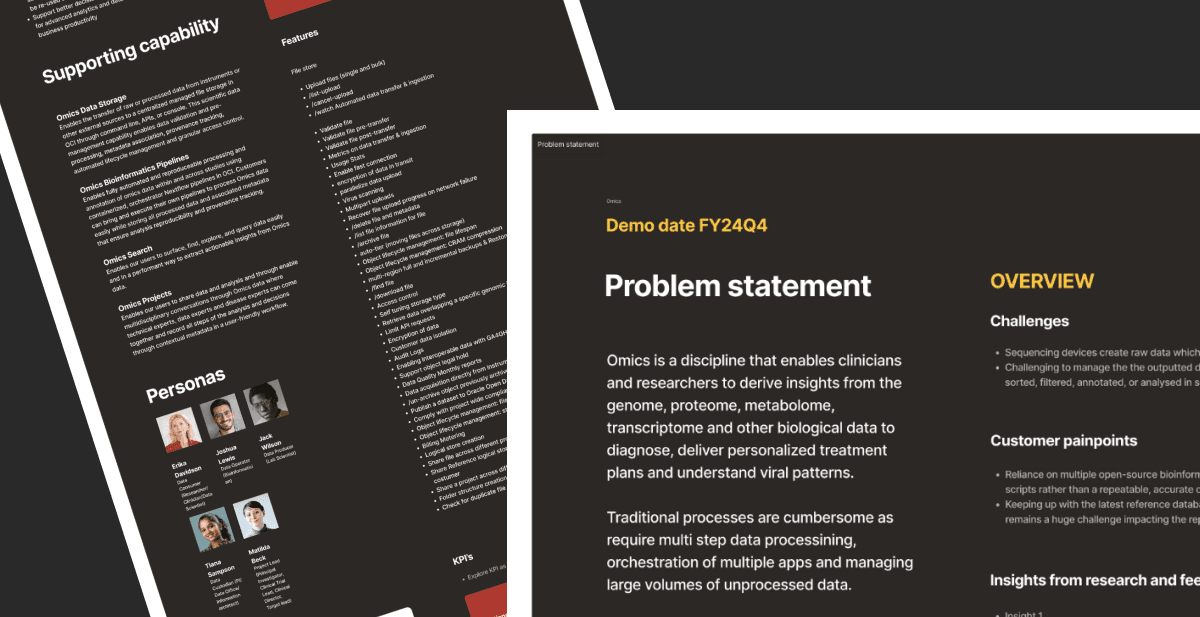
I kicked off with a UX plan reviewed by product and engineering, outlining personas, scenarios, IA, user flows, and usability studies.
Workshops helped refine use cases and surface scenarios across project creation, pipeline execution, and file storage. I visualised the offering through early diagrams, clarifying how features related and identifying deep-linking needs across services.
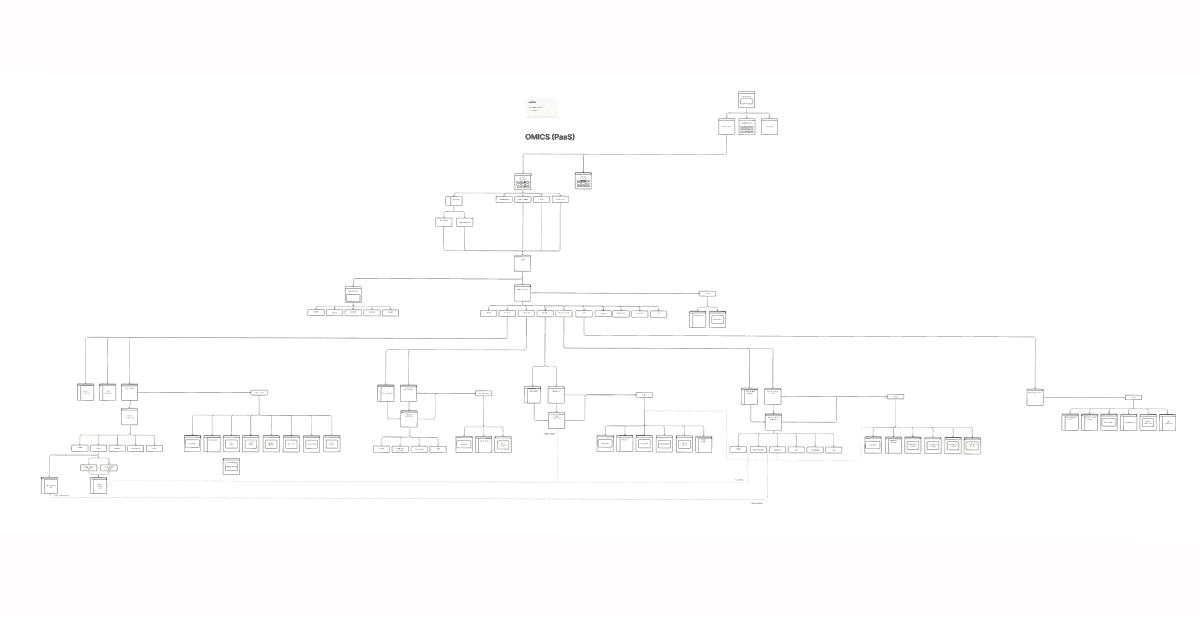
This gave us the foundation for a robust information architecture — one that accounted for parent-child relationships (projects, filestores, pipelines) and supported advanced needs like auditing across multiple areas.

Design Execution
Information Architecture & User Flows
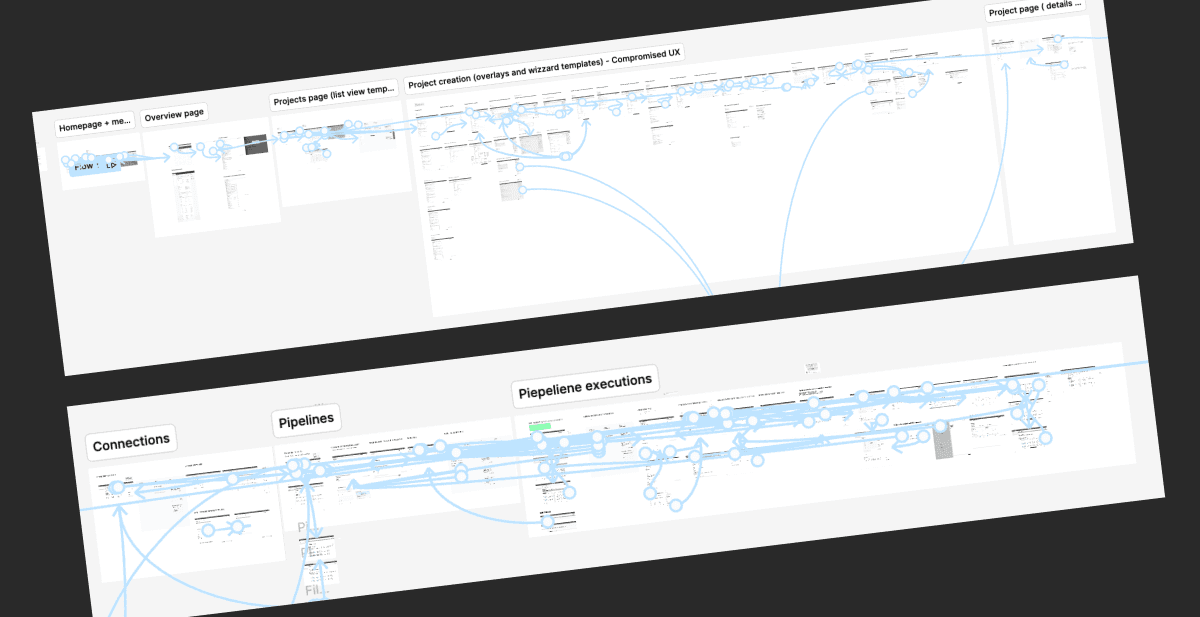
I designed comprehensive flows that covered CRUD operations, error states, and edge cases. This ensured we addressed both common workflows and high-stakes exceptions.
For project setup, we quickly realised a single 5-step stepper was impractical:
Too long to complete in one sitting
Backend limitations required partial saves
Different user roles (project managers vs configurators) required separate paths
The solution: two project creation flows — a simplified shell flow for essential data, and an advanced flow for full configuration.
Wireframes, Mockups & Prototypes
I sketched low-fidelity wireframes, refined them through stakeholder design reviews, and elevated them into high-fidelity mockups aligned with the design system.
Prototypes enabled:
Faster feedback loops in design reviews
Realistic usability testing with domain experts
Iteration on complex flows like project creation and pipeline execution
Component Documentation
To streamline implementation, I built a component mapping repository detailing contextual variations across user scenarios. This became a single source of truth bridging design intent with engineering execution — reducing ambiguity and speeding development.
Testing & Evaluation
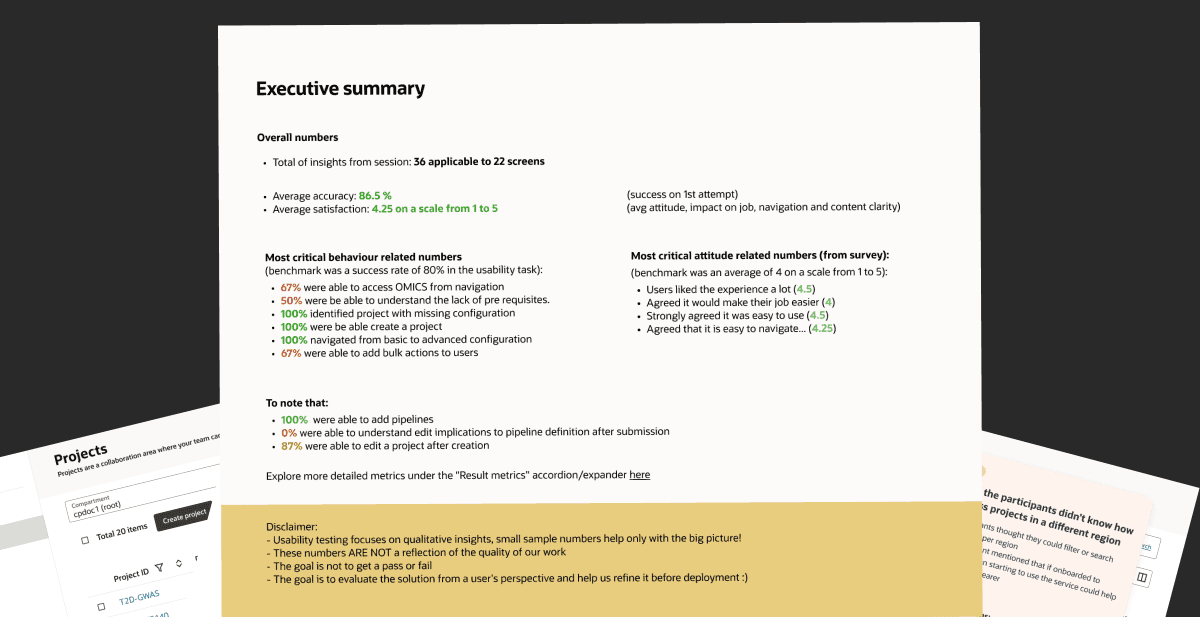
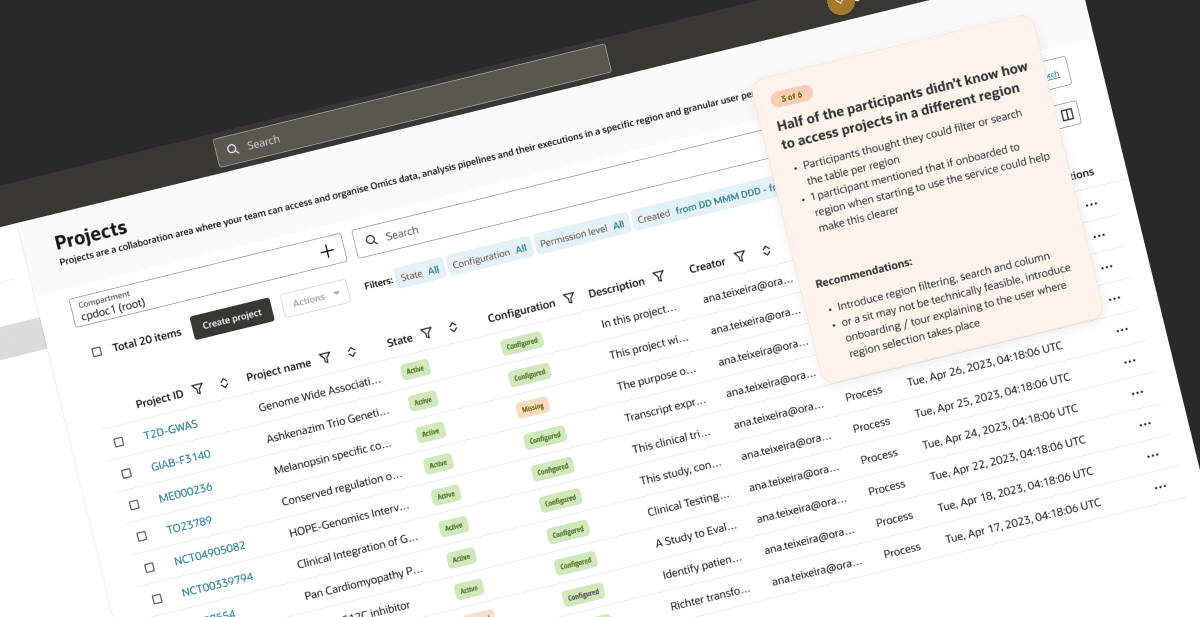
Two rounds of usability testing with 10 domain experts validated and refined the designs:
Phase 1: Project creation & pipeline setup
Phase 2: File store management
Key refinements included:
Improving shell vs advanced project creation flows
Expanding pipeline configuration options for expert users
Results were strong: 86.5% task success rate (above the 80% benchmark) and 4.5/5 satisfaction score even before implementing the final refinements.
Managing UX Debt
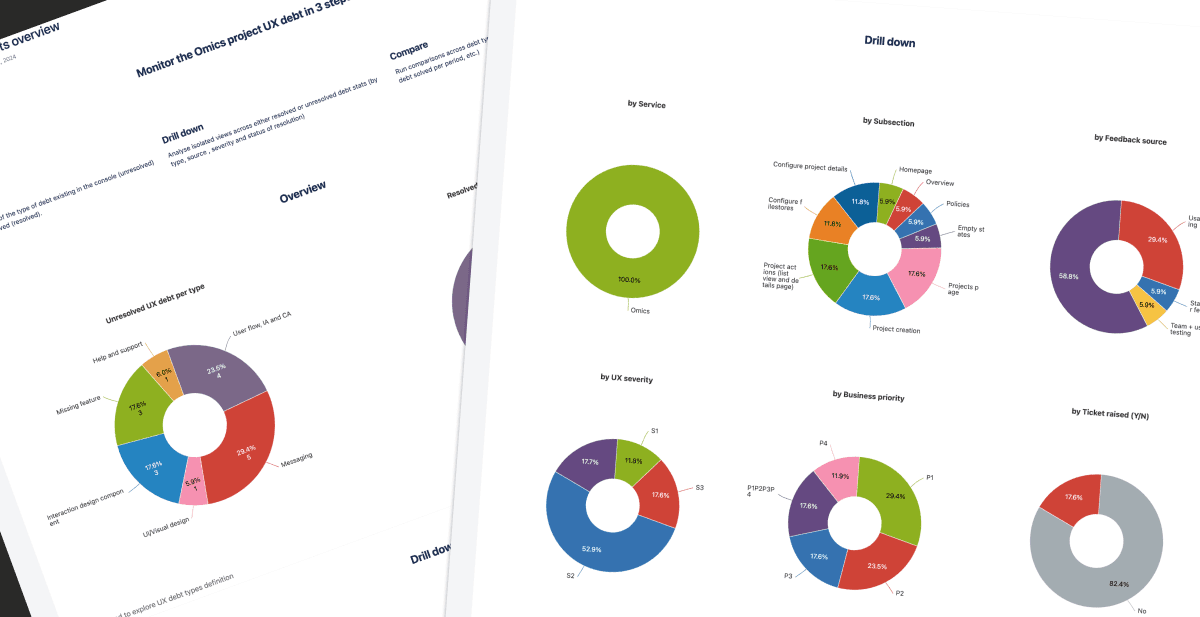
To avoid losing track of descoped features, I introduced a UX debt log — capturing compromises, their rationale, and severity. This ensured the team could revisit trade-offs in future sprints with full context.
Mentorship & Leadership
As the project scaled, I onboarded and mentored new designers:
Walking them through goals, personas, and feature areas
Guiding them in usability testing — from note-taking to running sessions
Encouraging contributions while maintaining consistency across the system
This grew confidence in the team and ensured the design process could scale sustainably.
Results
Unified platform where researchers could store, process, and analyse omics data in reproducible ways
Structured and reusable data — no longer siloed, enabling faster discovery and collaboration
86.5% task success rate and 4.5/5 satisfaction in usability testing with domain experts
Delivered end-to-end designs with specifications handed off to engineering for development