Cloud Cost Management Redesign: Removing Barriers to Activation
A comprehensive redesign of OCI’s cost management experience that reduced complexity by 75%, eliminated critical access barriers, and directly improved activation, adoption, and retention.
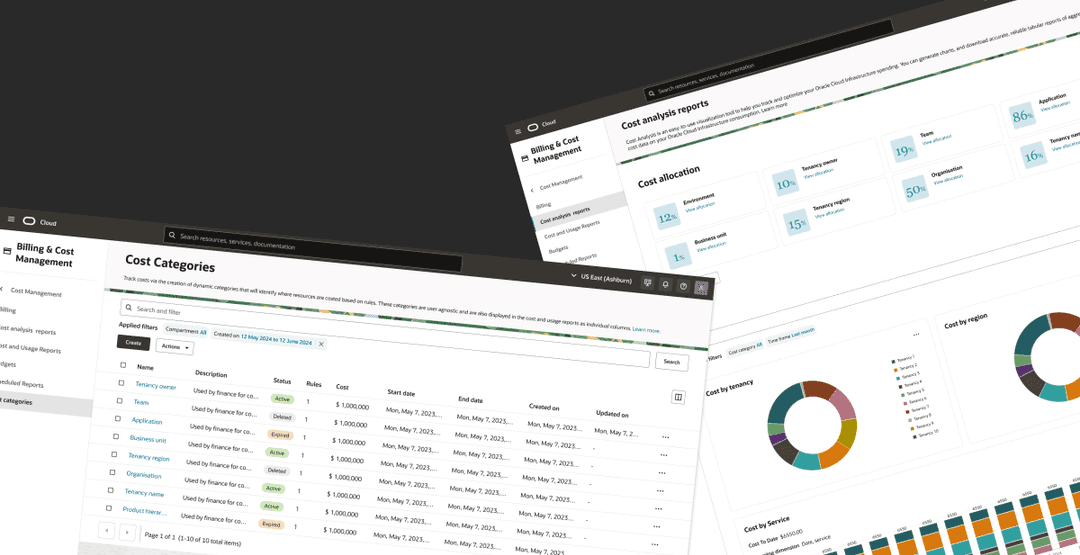
Cloud Infrastructure / FinOps
2022 - 2023
Lead UX Designer
Introduction
Managing cloud costs is one of the biggest challenges for enterprise customers. At Oracle Cloud Infrastructure (OCI), our generic tagging system was designed to allocate spend across resources — but in practice, it created friction at every step.
Users faced a 40-step disjointed process across three services, broken access permissions that blocked finance personas, and misleading cost data from incorrectly tagged resources. This was more than an inconvenience — it directly impacted user activation rates, platform stickiness, and churn.
I led the end-to-end redesign of this cost management experience, replacing generic tags with dedicated Cost Categories. The new solution cut the process down to 10 streamlined steps, introduced multiple creation methods for different personas, and improved activation by enabling finance and engineering teams to collaborate effectively.



Discovery & Definition
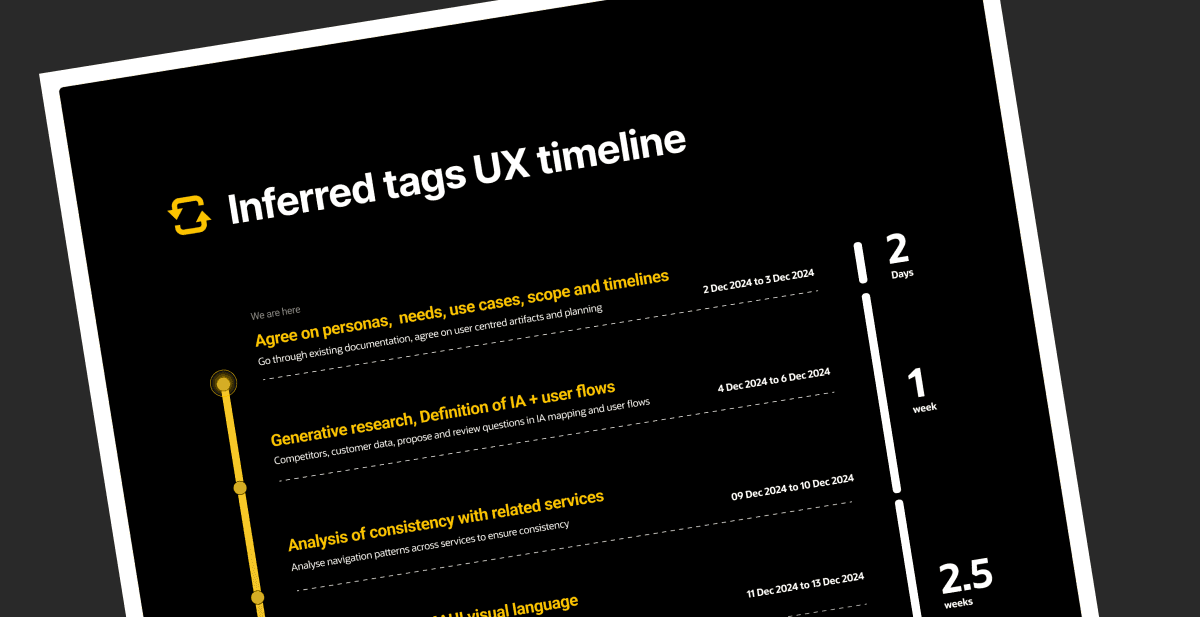
I launched the project with a kickoff workshop to align stakeholders on vision, goals, and scope. The session helped us frame a clear problem statement and consolidate known user insights.
I then created a UX plan outlining:
Personas and scenarios (finance managers, cloud architects, engineers)
Use cases and flows
Information architecture for a new cost category section
Wireframes, mockups, and prototypes
Iterative usability testing
This plan secured buy-in from product and engineering, addressed misconceptions that UX would slow delivery, and set clear milestones for delivery.
Research
Competitive Analysis
I benchmarked four major competitors (AWS, Azure, GCP, and FinOps tools) to understand terminology, IA, and patterns.
Key Findings
“Cost categories” was the industry-standard term
Most tools supported logic statements or bulk uploads
Flexibility existed, but required a strong understanding of allocation rules
Generative Research
I ran 6 interviews and contextual inquiries with finance users, architects, and engineers.
Insights included:
Finance personas lacked console access
Excel was the primary planning tool
Engineers relied on Terraform / custom scripts
Strong demand for bulk updates (tagging 400+ resources at once)
Need to retroactively reallocate costs
Desire for anticipatory naming suggestions
Design Execution
Analysing the Existing UX
The original flow required ~40 steps across three services. Key pain points included:
No bulk editing (resources had to be tagged one by one)
Full compartments were tagged instead of subsets
No way to untag or retroactively adjust categories
Incorrect tagging led to misleading dashboards
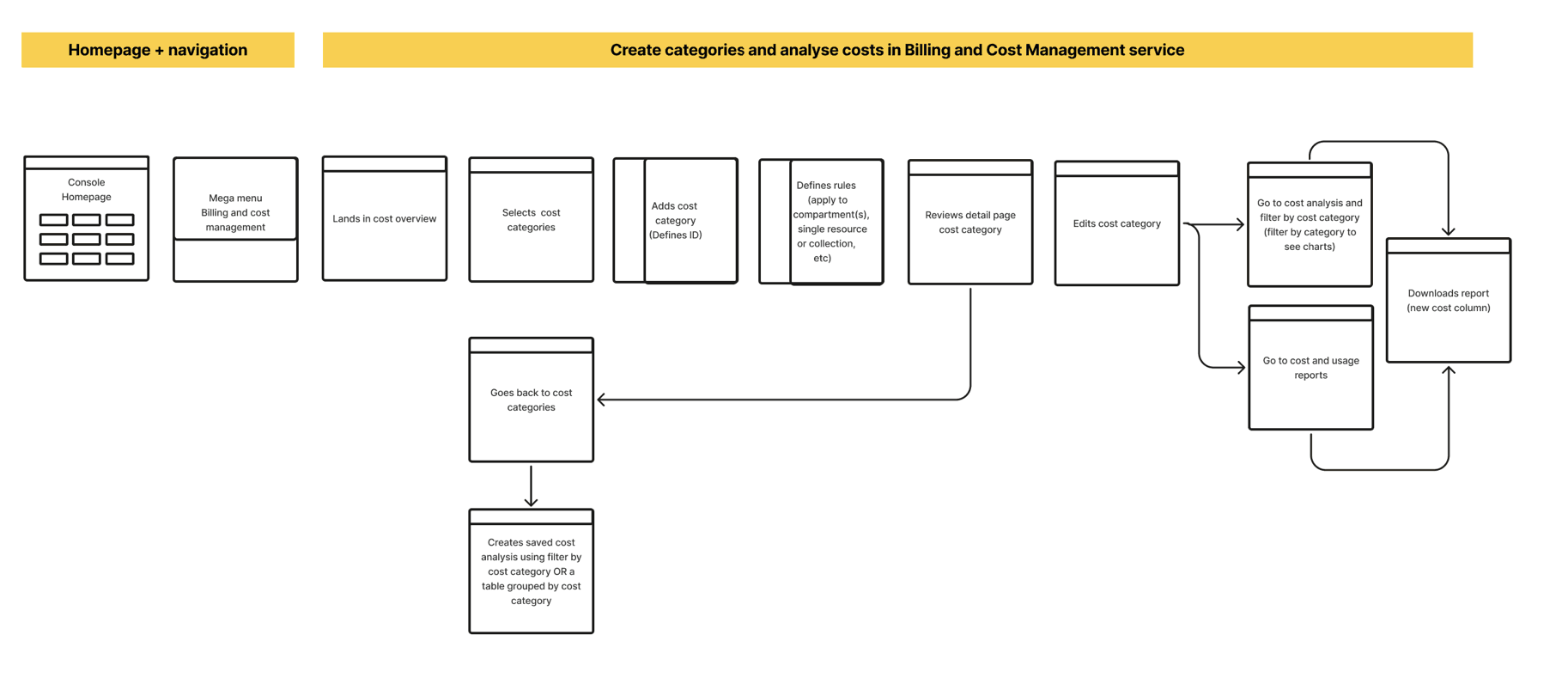
Redesigning the Journey
By consolidating flows into a dedicated Cost Categories section, we cut the process from 40 steps to 10 — a 75% reduction in complexity.
Before: 40 steps across 3 services
After: 10 streamlined steps in 1 service
Information Architecture
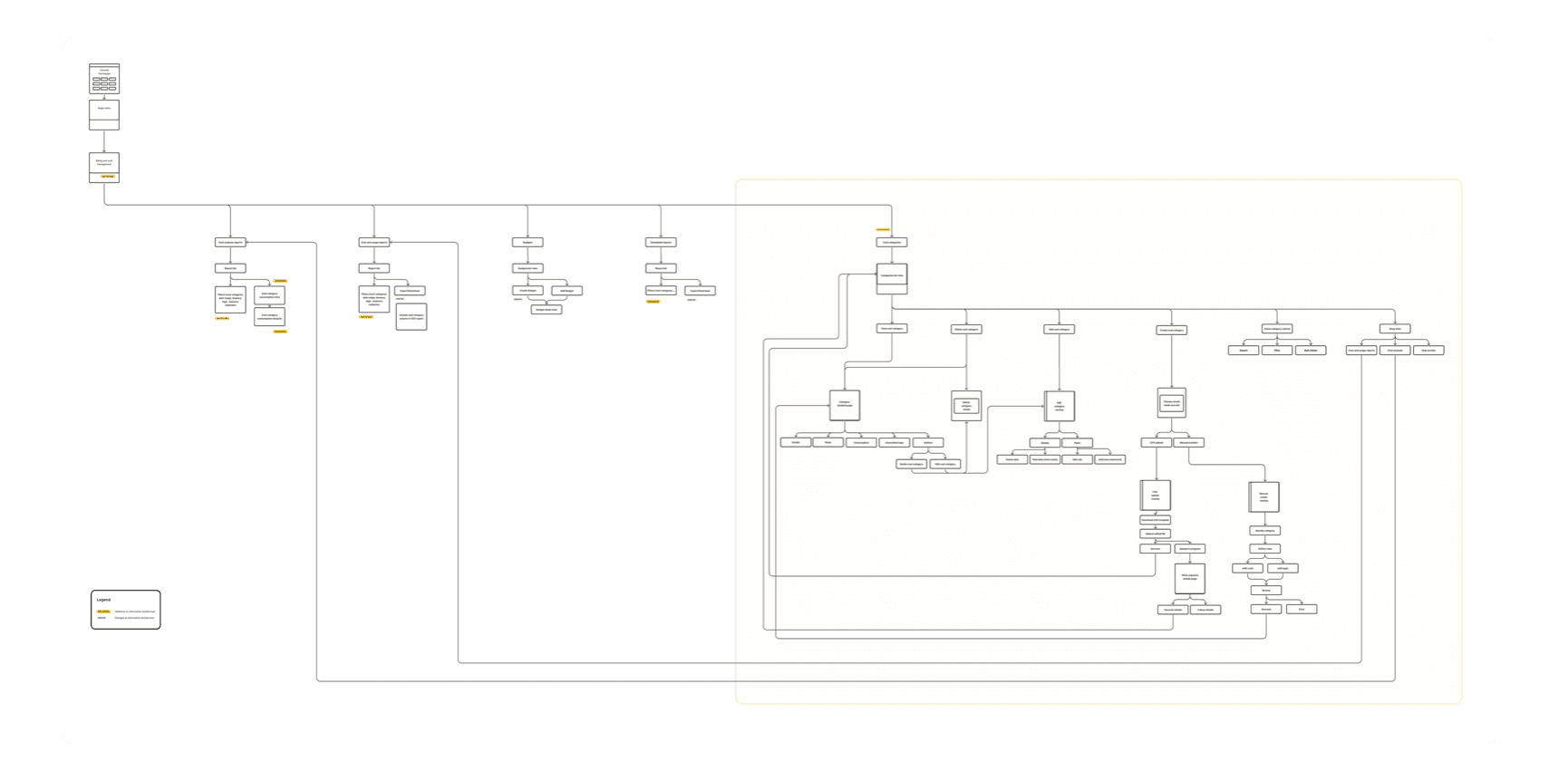
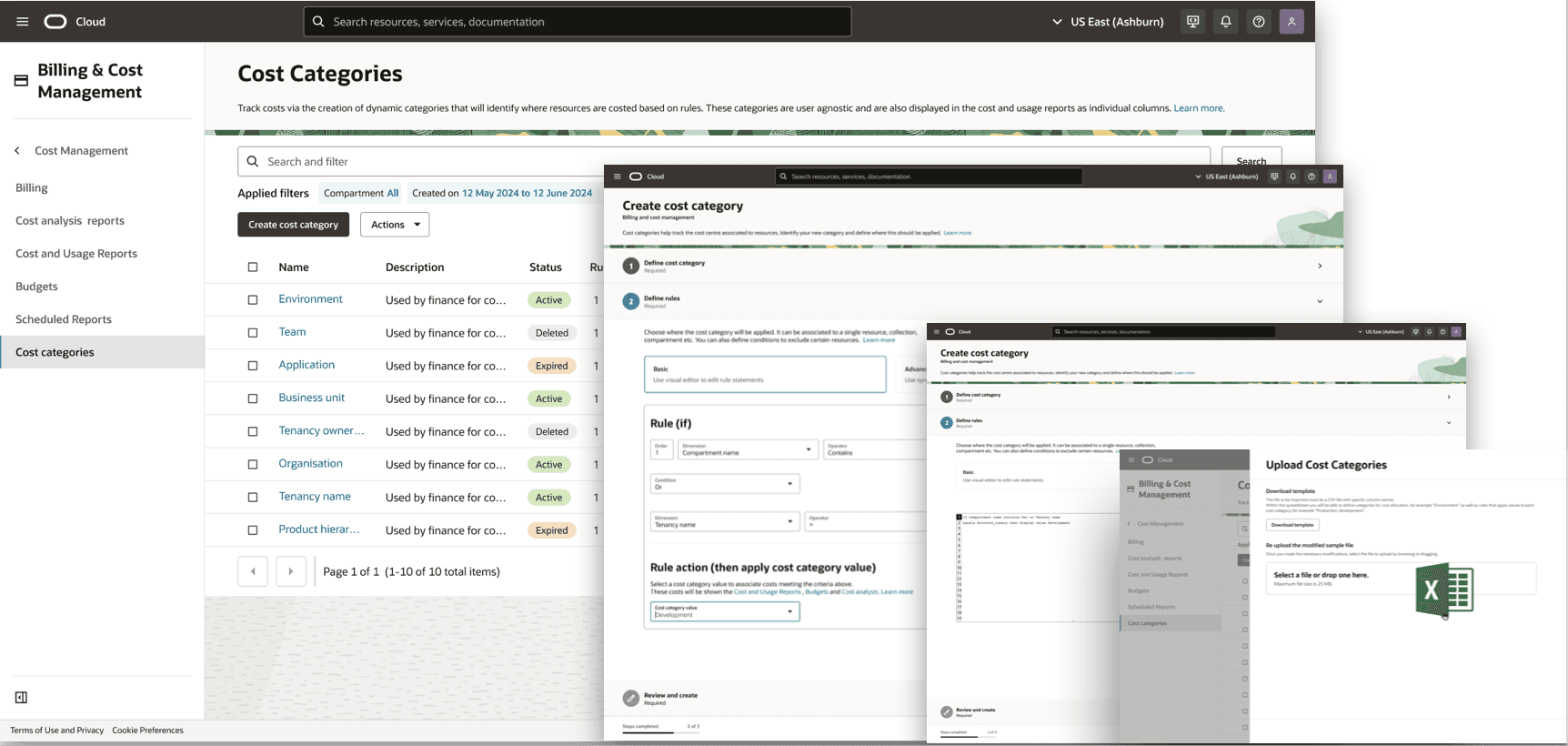
I designed a new Cost Categories subsection integrated into Billing & Cost Management. This avoided disruption to existing workflows while providing a centralised, scalable entry point for managing costs.
Concept Proposals
We supported multiple interaction models to match different personas:
CSV Uploads – bulk creation for finance managers
Logic-based rule builder – WYSIWYG rules for operations teams
Code syntax editor – direct control for engineers
CRUD management – create, update, delete categories, with retroactive changes
Prototypes & Testing
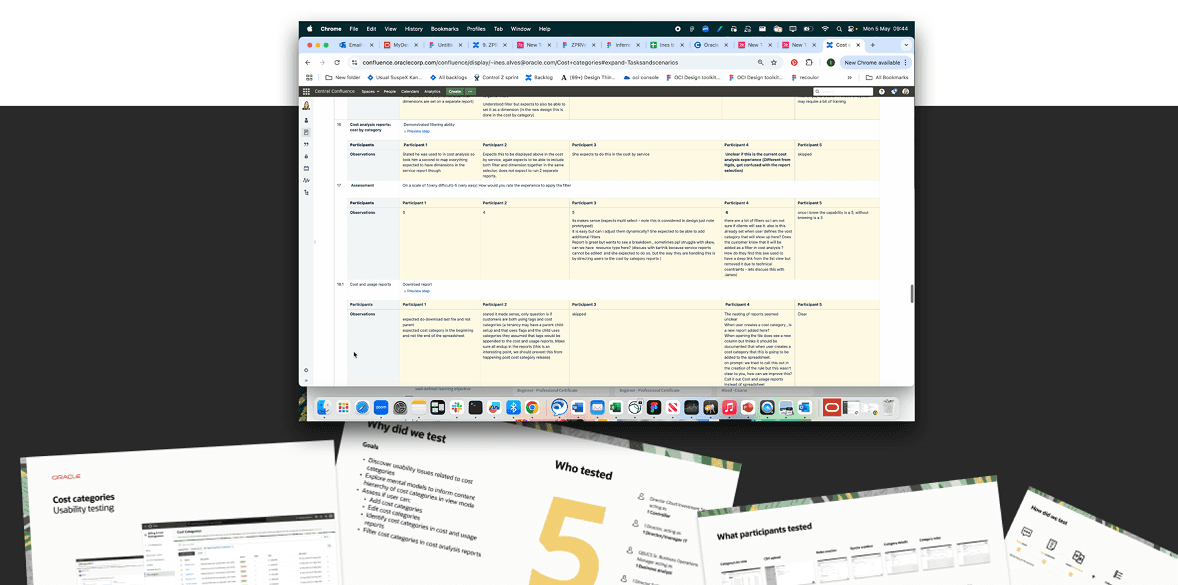
High-fidelity prototypes brought these concepts to life and were tested with domain users.
Main findings:
Users preferred a centralised IA under Billing & Cost Management
Multiple creation methods were essential for adoption across personas
Confusing terminology (e.g., “rule value”) required refinement
Users needed clear retroactive change indicators
Inactive states had to be visually distinct from deleted states

Results
Reduced process complexity by 75% (40 → 10 steps)
Achieved 92% task success, 4.5/5 satisfaction, 4.3/5 usability
Increased activation rates by removing access barriers and aligning workflows with user mental models
Directly contributed to monetisation by increasing feature adoption, retention, and customer confidence in OCI cost management
Learnings
Multiple paths drive adoption
Supporting CSV, logic, and code ensured accessibility across finance, ops, and engineering personas.
Access is as important as UX
Without resolving broken permissions, adoption would never have improved — fixing this was a turning point.
Complex problems need simple anchors
Centralising features under a new Cost Categories section gave users a clear mental model, reducing confusion and driving engagement.