Oracle Cloud Guard: Designing Clarity and Control for Security at Scale
Led UX improvements across Oracle Cloud Guard and Vulnerability Scanning Service (VSS), transforming enterprise cloud security workflows through dashboard redesigns, orchestration flows, and CVE management—under strict design system and framework constraints.
Enterprise Software
2022 - Present
Lead UX Designer
Context
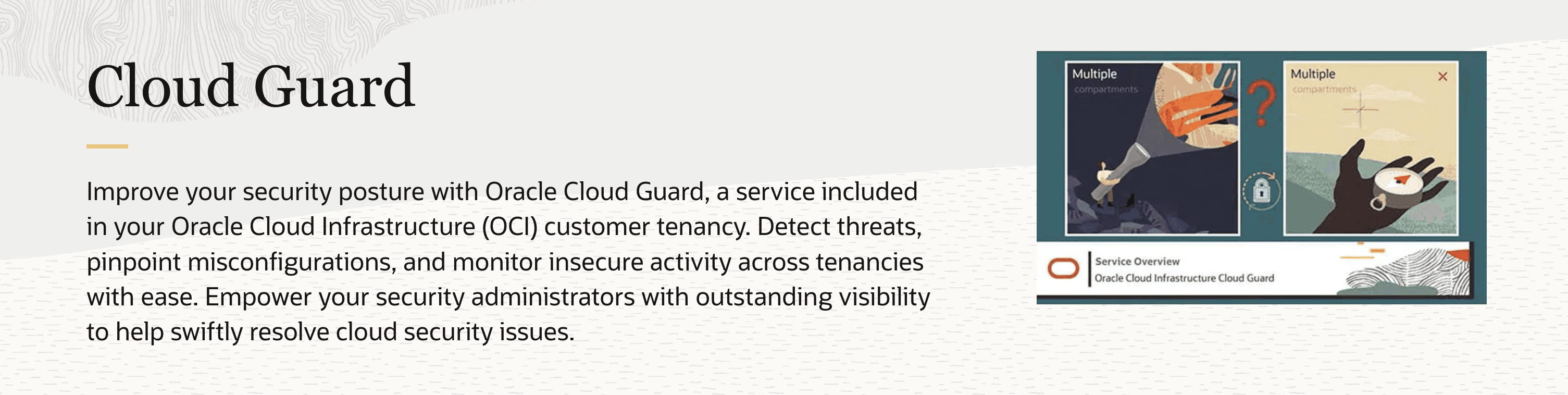
Oracle Cloud Guard is the central security service within Oracle Cloud Infrastructure (OCI), enabling users to detect threats, automate remediation, and monitor compliance posture at scale. Paired with Vulnerability Scanning Service (VSS)—which performs continuous CVE analysis across workloads and containers—these tools form a critical part of Oracle’s cloud security offering.
As the lead designer, I was responsible for reimagining key areas of both products, including:
The Cloud Guard dashboard (migrated from MAUI to Redwood)
Query Management tools
Security orchestration flows
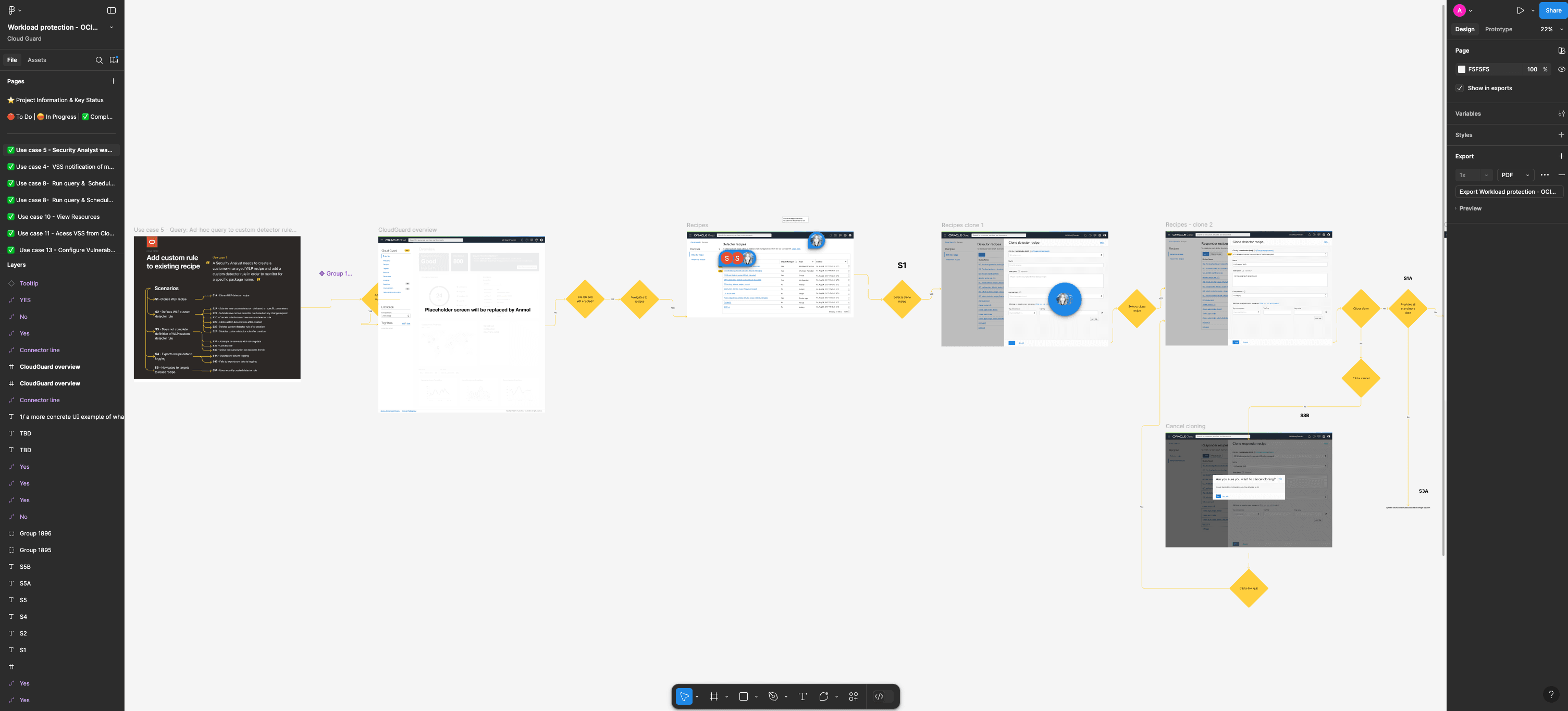
Target and Recipe setup
Enhancements to VSS scanning, alert tuning, and fleet policies
All design work had to comply with Oracle Redwood design standards and work within the JET + Preact framework, which posed unique challenges around layout flexibility and component scalability.
Results
The redesign efforts led to tangible improvements in product usability, team alignment, and end-user engagement.
+40%
Increase in dashboard interactions (posture summaries, triage actions)
3×
Growth in saved and favorited queries post-update
↓ Support
Fewer issues reported due to improved alerts


Challenges
Rigid front-end constraints: All components had to conform to Redwood guidelines and use prebuilt JET + Preact elements
Security complexity: Needed to balance usability with regulatory, operational, and technical detail
Cross-team ownership: Work spanned multiple domains (Cloud Guard, VSS, dashboard architecture), requiring collaboration across security engineering, product, and front-end
The opportunity lay in turning dense, underutilized tools into streamlined, action-driven workflows without compromising clarity or compliance.
My Role
As the Lead Product Designer, I:
Owned the end-to-end UX strategy for Cloud Guard and VSS
Led redesign efforts across dashboard, orchestration, query tools, and policy flows
Conducted UX reviews with PMs, engineers, and compliance teams
Worked hands-on with JET engineers to validate implementation feasibility
Maintained full design system compliance across all deliverables
Delivered multiple flows as production-ready screenflows used directly by developers
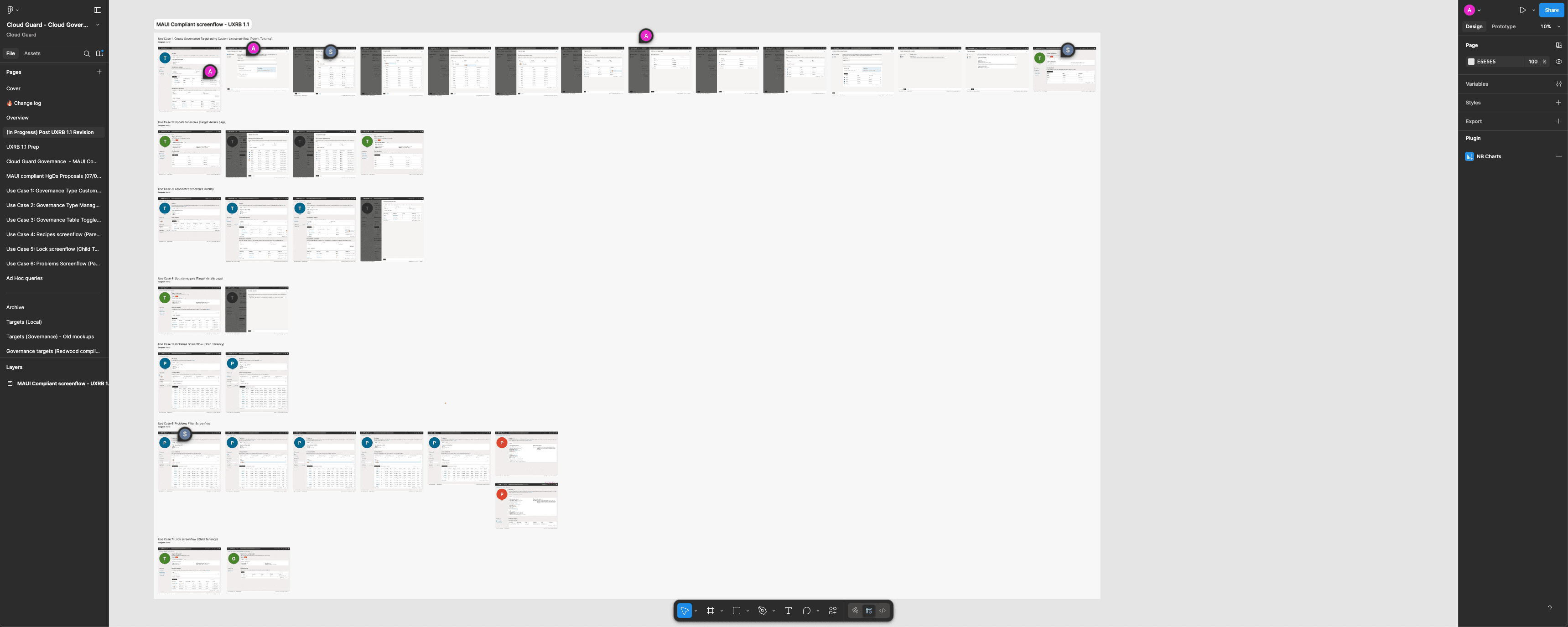
Cloud Guard Dashboard Redesign
The original dashboard was data-heavy and underused. I led a complete overhaul to turn it into a true posture hub for security teams.
Key Improvements:
Replaced static tables with visual posture summaries
Highlighted active threats, tenancy health, and coverage gaps
Added direct entry points to triage and automation
Fully rebuilt using Redwood layout tokens and Oracle JET components
“Now the dashboard actually tells me something useful.”
Shasi Pulijala
Cloud PM
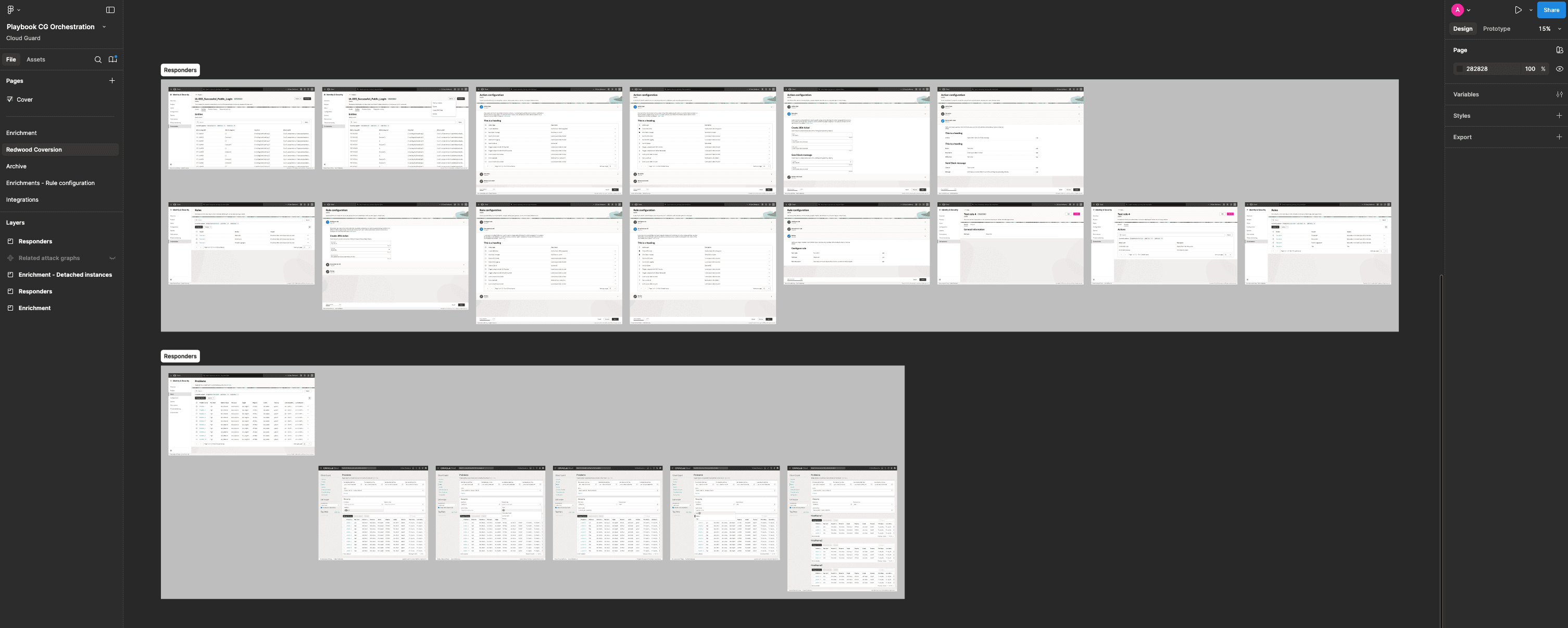
Orchestration UX Overhaul
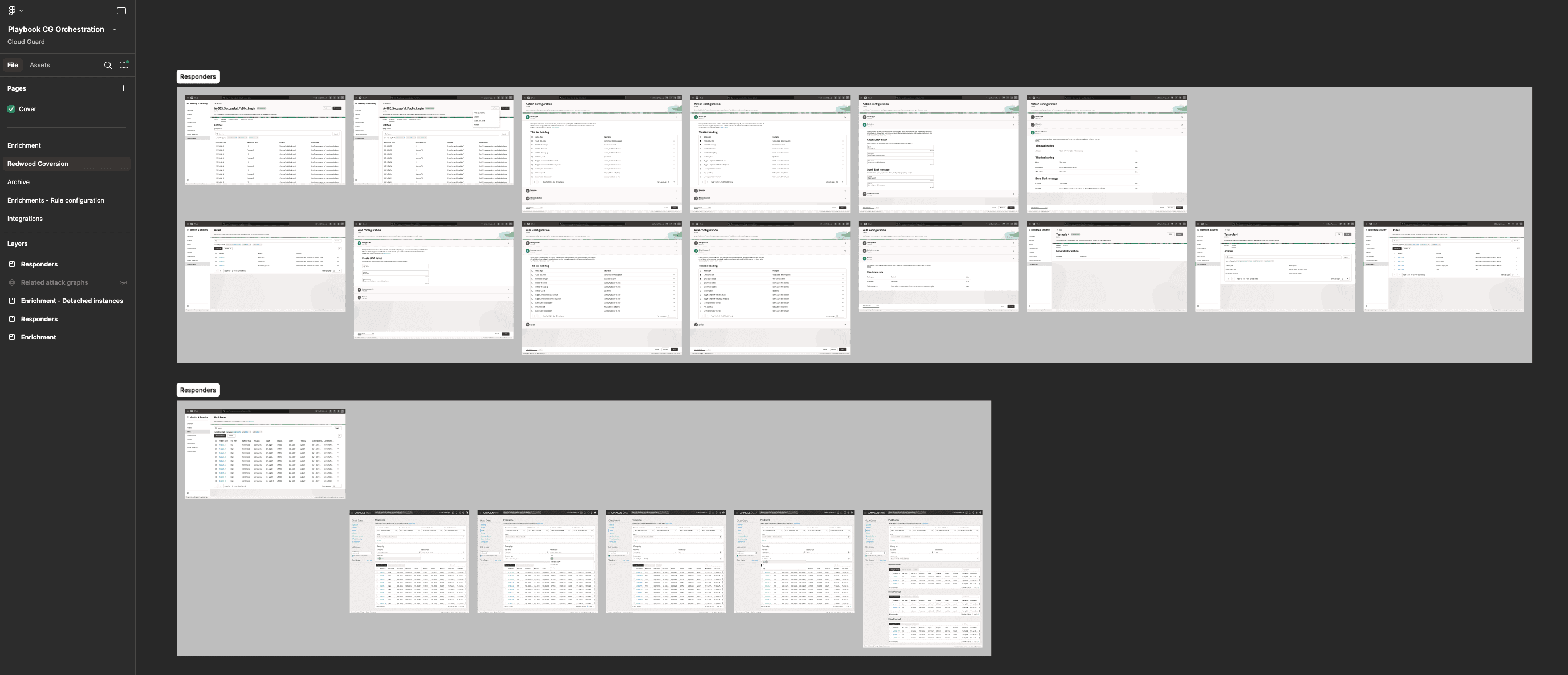
Security teams had a powerful automation engine, but no clear way to build logic. I designed a modular orchestration system where users could build flows like:
“If X is detected → Isolate instance + Notify team”
Key Improvements:
Created conditional logic builders with reusable rule blocks
Designed visual sequencing with validation and impact previews
Ensured interaction patterns aligned with Redwood guidance
“We had the orchestration engine — you made it usable.”

Swati Saxena
UI Engineering Lead
Query Management Enhancements
The query interface was previously underutilized. I turned it into a strategic toolset for threat hunting and operational forensics.
Key Improvements:
Added support for saving, favoriting, and scheduling queries
Introduced filter presets and query history
Linked results to posture views and automation recipes
Impact: 3× increase in query reuse (measured via telemetry)
“This used to be a buried feature — now it’s one of the most valuable tools in our security workflows. The ability to save and schedule queries has completely changed how our analysts operate day-to-day.”

Daniel Hirschberg
Cloud Guard PM
VSS Workflow Improvements
I collaborated with the Vulnerability Scanning Service team to reduce alert fatigue and support better CVE prioritization.
Key Improvements:
Grouped vulnerabilities by resource and severity
Added suppression and snooze functionality
Designed fleet-level scanning and policy workflows
Unified views between VSS and Cloud Guard for better posture reporting
Result: Fewer support cases and higher user confidence in CVE tooling
“The changes to vulnerability grouping and suppression logic made an immediate difference. Our teams aren't drowning in alerts anymore — we can actually focus on what matters.”

Abhishek Sharma
Principal Engineer, Vulnerability Scanning Service
Design Constraints & Technical Realities
Every design had to be:
Fully Redwood-compliant: colors, spacing, layout, and interaction
Built with JET + Preact: no custom components or CSS overrides
Implementable using components documented in Oracle Storybook
This meant:
Designing layout logic-first, not just pixel-perfect mockups
Working side-by-side with front-end developers on feasibility
Prioritizing scalable, repeatable solutions across the console
“This wasn’t just design. It was system thinking under constraints.”

Karl Miller
Director of Product Management at Oracle
Measurable Outcomes
+40% increase in daily engagement with Cloud Guard’s redesigned dashboard
3× increase in saved and favorited queries within the Query Management tool
Reduction in support cases related to alert fatigue in Vulnerability Scanning Service (VSS)
Full migration from MAUI to Redwood for all Cloud Guard UI components
Fewer user errors reported during orchestration setup and automation workflows
Results
The ICSM platform transformed how supply management for clinical trials was conducted:
Operational Efficiency: Teams were able to plan and execute trials more efficiently, with fewer costly errors.
Stronger Collaboration: The platform aligned different teams (R&D, operations, logistics) within one system.
Faster Decision-Making: Tools like scenario comparison sped up planning cycles significantly.
Cost Savings: More accurate forecasting helped avoid overstocking and shortages, reducing trial waste.
Adoption: Leading pharmaceutical companies adopted the system across pilot programs, validating the real-world impact.
Reflection
Working on Cloud Guard and VSS taught me how to design at the intersection of usability, scalability, and technical constraint. This wasn’t about creating flashy interfaces — it was about enabling control and clarity for users managing real security risks.
The dashboard redesign stands out as my proudest contribution. It gave security teams a true command center — one that surfaced risk clearly, guided action confidently, and delivered value instantly.
Across every flow, my mission was to make enterprise cloud security usable, actionable, and trusted.